
Protest before the Great Warsaw Race. Activists: "Binding horses' tongues is an unjustifiable brutality."
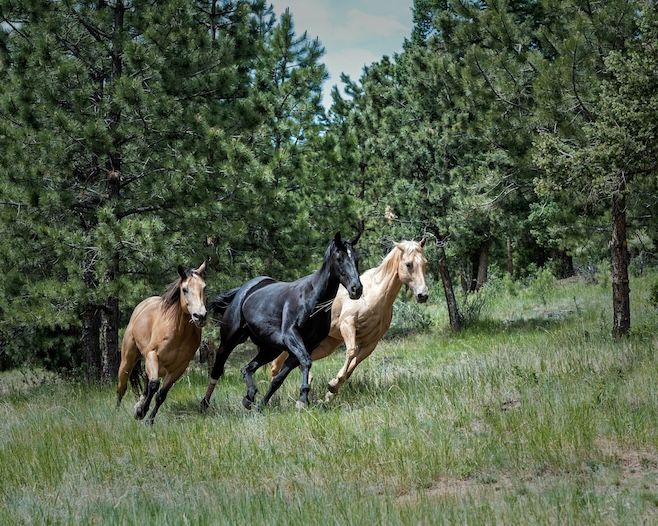 Unsplash.com / Gene Devine
Since morning, representatives of the Friend of Animals Foundation, the Lawyers for Animals Association, and the Follow The White Horse initiative have been gathering in front of the Tor Służewiec ticket offices.
They protested against the mechanical immobilization of a horse's tongue by fastening it to the jaw. Activists emphasize that although the horse racing regulations have prohibited tying the tongue for years, the practice—often euphemistically referred to as "fastening" or "pinning"—is still used.
"We are protesting today because tying horses' tongues at the Służewiec racetrack is still ongoing," said Ewa Leszczyńska, president of the Friend of Animals Foundation.
On September 1, the District Prosecutor's Office in Warsaw-Ursynów initiated proceedings regarding fourteen acts related to fourteen horses. Organizations report that even after the investigation began, they managed to document further cases of this method being used.
During the briefing, information from the meetings of the Polish Horse Racing Club Council was presented. According to activists, on May 27, a veterinarian reportedly described tongue tying (and the circumvention of regulations through "pinning") as "unjustified brutality and a form of physical doping." On June 17, the Council was said to discuss studies indicating that the practice does not improve breathing or endurance and may cause physical and psychological harm. Nevertheless, on August 18, the PKWK issued a statement claiming that tongue fastening is used on horses that require it and "does not seem to harm the horses."
"The Polish Horse Racing Club tries to call this practice something else, while it has exactly the same purpose," said Maria Januszczyk from the Lawyers for Animals Association.
The organizers also pointed to the responses from institutions. The Ministry of Agriculture and Rural Development, after receiving a letter from the organizations, reportedly indicated the necessity of adhering to regulations and sought clarifications from the PKWK. Meanwhile, on August 18, Totalizator Sportowy demanded that the Club immediately cease the use of "any mechanical forms of immobilizing horses' tongues." According to information from the briefing, Totalizator has still not received a response.
Activists emphasized the issue of responsibility. They pointed out that not only the individuals directly performing the action but also the technical commissions appointed by the PKWK—which allow horses to race—should respond. Ewa Leszczyńska noted that the Służewiec racetrack and the Polish Horse Racing Club are separate entities, and the Club bears the most responsibility for oversight.
The director of the Służewiec Racetrack, Paweł Rabantek, emphasized in a conversation with the media that the track had appealed to the PKWK (responsible for the technical commission) to introduce solutions that would prevent the immobilization of tongues. "We have expressed our will to discontinue this practice," he said.
The protest took place on the day of the Great Warsaw Race—a prestigious, highest-funded international race in Poland, whose winner receives the Mayor of Warsaw's Award. The final assessment of the responsibility of specific individuals rests with the authorities conducting the proceedings, including the prosecutor's office.
Sources
See also
See all
26 September 2026
The carbon footprint of animal skin is over 12 times greater than that of vegan alternatives.

24 September 2026
The British are giving up processed "plant-based meat." They are choosing beans and tofu.
23 September 2026
Brazil bans foie gras. A historic success for Animal Equality in Latin America.
21 September 2026
Switzerland bans the import of fur produced in a cruel manner. Groundbreaking parliamentary vote.